












Choosing a rolling vs wall mount hair color processor comes down to one question: do you need your processor to move, or do you need your floor back? A rolling base processor travels to any chair and sets up in minutes. A wall mount processor lives on an arm above one station and takes up zero floor space. Both give you the same infrared heat, and with a SalonPro processor both can cut color processing from 30–60 minutes to 10–15 minutes. The right pick depends on your layout, your lease and how your team works.
This guide walks through how each style works day to day, what space and installation each one needs, and which salons tend to do best with each, so you can choose with confidence.
Rolling vs Wall Mount Hair Color Processor: The Short Answer
- Choose a rolling base if you rent a suite or booth, may move locations, share one processor across several chairs, or cannot drill into your walls.
- Choose a wall mount if you own or control your space, have a dedicated color station, and want a clean, clutter-free floor.
- Mix both if you run a larger salon: wall mounts over your busiest color chairs, plus one rolling unit that can go wherever it is needed.
How a Rolling Base Processor Works in Your Salon
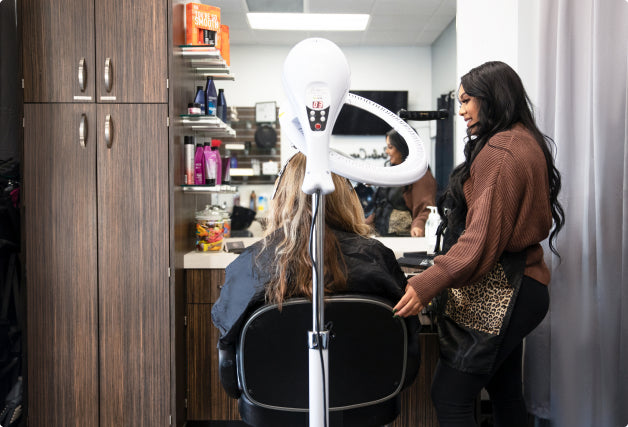
A rolling base processor sits on a stand with caster wheels. You roll it behind the client, adjust the height, position the head and start the timer. When the service is done, you roll it to the next chair or tuck it into a corner.
What stylists like about rolling processors
- Total flexibility. One processor can serve every chair in the room. That matters when color clients are spread across the day or across stylists.
- No installation. SalonPro rolling base models assemble in about 10–15 minutes and plug into a standard 110V outlet with a 3-prong plug. No contractor, no drilling, no landlord approval.
- Adjustable height. Our rolling Orbiting Halo and Multi-Zone+ models adjust up to 70 inches high, which helps with taller clients and higher styling chairs.
- It moves when you move. If you change suites, upgrade to a bigger space or take your business mobile for events, the processor comes with you.
Things to plan for with a rolling base
- Floor space. The base needs room behind or beside the chair. For example, the Multi-Zone+ Rolling Base has a footprint of about 27" wide by 24" long, and the Orbiting Halo Rolling Base about 20" wide by 18" deep.
- A parking spot. Decide where it lives when it is not in use, so it is never in a walkway.
- Cord placement. The cord is 6 feet long, so plan your outlet so the cord never crosses a path where people walk.
How a Wall Mount Processor Works in Your Salon
A wall mount processor attaches to a bracket on the wall and reaches the client on an adjustable swing arm. When you are done, you fold the arm back against the wall and the floor is completely clear.
What stylists like about wall mount processors
- Zero floor space. Nothing on wheels, nothing to trip over and nothing to roll out of the way during a blowout or a cut.
- Always ready. The processor is right where you need it, at the same station, every time. No hunting for it in the back room.
- A built-in, finished look. Wall mounts read as part of the salon design, which many owners prefer for a high-end feel.
- Long reach. SalonPro wall mount arms extend from 34 inches closed to 63 inches fully extended, so you can position the head comfortably over the client.
Things to plan for with a wall mount
- Professional installation. SalonPro wall mount processors must be installed by a licensed and bonded contractor. Budget time for that before your first color client.
- The right wall. They mount to concrete block or drywall with studs. Hollow drywall alone is not enough.
- Wall width and height. The Multi-Zone+ Wall Mount needs at least 48 inches of wall space, and the bracket is mounted 6 to 8 feet from the floor.
- Permission. If you lease, check with your landlord or suite manager before drilling.

Side-by-Side Comparison
| What matters | Rolling base | Wall mount |
|---|---|---|
| Floor space | Needs a spot behind or beside the chair | None; folds back to the wall |
| Setup | About 10–15 minutes of assembly, plug in | Must be installed by a licensed and bonded contractor |
| Moves between chairs | Yes | No; serves one station |
| Moves with you to a new space | Yes | Needs to be uninstalled and reinstalled |
| Wall requirements | None | Concrete block or drywall with studs; mounted 6–8 ft high |
| Reach | Height adjusts up to 70" (Halo and Multi-Zone+ rolling) | Arm extends 34" to 63" |
| Power | Standard 110V, 3-prong plug, 6 ft cord | Standard 110V, 3-prong plug, 6 ft cord |
| Best for | Suites, booth renters, shared processors, renters who cannot drill | Owned salons, dedicated color stations, tight floor plans |
One thing does not change between the two: the processing itself. Rolling and wall mount versions of the same SalonPro model use the same infrared heating, the same digital time and temperature controls and the same presets or zones. You are choosing how the processor fits your room, not how well it processes color.
Which Style Fits Your Salon?
Salon suite or booth renter
Go rolling. You likely cannot drill into the walls, you may move in a year or two, and a single rolling processor covers your one or two chairs. The Orbiting Halo Rolling Base is a popular starting point because it handles both color processing and lighter drying work.
Small salon with tight floor space
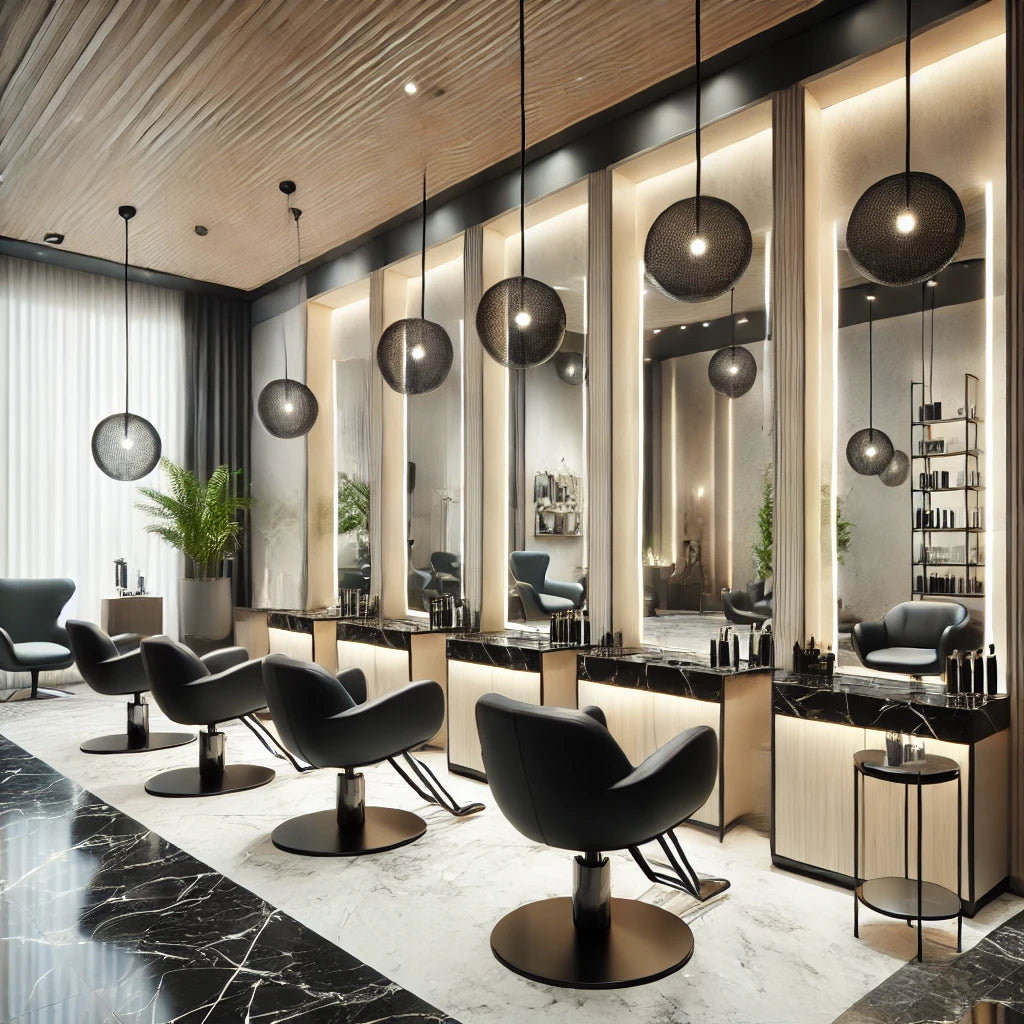
Lean wall mount over your main color chair. Every square foot you free up makes the room feel bigger and keeps walkways clear for clients and staff.
Busy color salon with several stylists
Mix both. Put wall mounts over the stations that do the most color, then keep one rolling unit as a floater for overflow days, so no client waits for a processor to free up.
Mobile stylists and pop-up events
Rolling is the only real option. Plan on enough space in your vehicle and a standard outlet at each location.
Salon in the middle of a remodel
Start rolling now and add wall mounts once the new layout is final. That way you are never waiting on construction to start offering faster color services.
Questions to Ask Before You Buy
- Do I own my space, or do I need permission to drill into the walls?
- Will this processor stay at one chair, or move between several?
- Do I have a concrete or stud wall with enough width at my color station?
- Where will a rolling unit park when it is not in use?
- Am I likely to move or expand in the next couple of years?
- Do I need the per-zone heat control of a Multi-Zone+, or the rotating ring and presets of an Orbiting Halo? Our SalonPro processor comparison breaks down each model.

Getting the Most From Either Style
- Follow the product label. Always use heat the way the color or lightener manufacturer directs. Your processor gives you control; the label tells you how much heat the formula wants.
- Book around your processor. Faster processing only pays off if your schedule uses the time. Stagger color clients so one is processing while you apply or rinse the next.
- Keep it clean and stored safely. Wipe the head down between clients, fold wall arms back after each service, and park rolling units out of walkways.
Curious what is happening inside the machine? Read How Does a Hair Color Processor Work? for a step-by-step look at infrared processing.
Frequently Asked Questions
Is a wall mount processor more powerful than a rolling one?
No. Rolling and wall mount versions of the same SalonPro model use the same infrared heating and controls. The difference is how the processor is held in place and how much floor space it uses, not how it processes color.
Can I install a wall mount processor myself?
SalonPro wall mount processors must be installed by a licensed and bonded contractor. They mount to concrete block or drywall with studs, with the bracket 6 to 8 feet from the floor. A professional install keeps the arm secure over your clients.
How much space does a rolling base processor need?
Plan for the base footprint plus room to move around the chair. The Multi-Zone+ Rolling Base is about 27" by 24", and the Orbiting Halo Rolling Base about 20" by 18". You will also want a spot to park it between clients.
Which is better for a salon suite?
A rolling base is usually the easier fit for a suite. It needs no installation or landlord approval, plugs into a standard outlet, and moves with you if you change suites.
Do both styles plug into a regular outlet?
Yes. SalonPro rolling and wall mount processors run on standard 110V power with a 6-foot cord and a 3-prong US plug.
Find the Right Processor for Your Space
Whether you want the freedom of a rolling base or the clean look of a wall mount, the goal is the same: faster color, happier clients and more room in your day. Browse our full line of infrared hair color processors to compare rolling and wall mount options, and see current pricing on each product page. Join 40,000+ salon professionals who already work smarter with SalonPro.
The SalonPro Team